
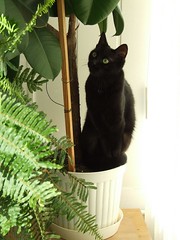
- Image by alexandrei via Flickr
We once knew a young girl who loved to eat plants. Her parents had to watch her all the time when she was outside, because she just couldn’t resist tasting everything, including any available poisonous plants! The same precaution should apply to pets, since there are numerous plant species that are toxic to cats and/or dogs, as well as to other pets. The results might be anything from a little tummy-ache to diarrhea to death.
The ASPCA (American Society for the Prevention of Cruelty to Animals) has a searchable database of plants that are toxic for dogs, cats, horses, and some other animals. They also have a 24-hour poison hotline.
Since some pets are very small, it might only take a small amount of some types of poisonous plant material to have a strong toxic effect on their little bodies. Cats and small dogs would therefore be more vulnerable than horses or cows. Some of the effects of poisonous plants are vomiting, diarrhea, loss of appetite, gastro-intestinal distress, kidney damage, liver damage, seizures, convulsion, cardiovascular collapse, dehydration, muscle twitching, and other symptoms. Each plant has its own set of possible symptoms, of course.
According to the ASPCA, he most common of the plants that are poisonous to pets are:
- Lilies (may cause severe kidney damage)
- Marijuana (may cause coma)
- Sago Palm (may cause liver failure)
- Tulip/Narcissus bulbs (may cause cardiac abnormalities)
- Azalea/Rhododendron (may cause death)
- Oleander (may cause death)
- Castor Bean (may cause death)
- Cyclamen (may cause death)
- Kalanchoe
- Yew (may cause death)
- Amaryllis
- Autumn Crocus
- Chrysanthemum
- English Ivy
- Peace Lily (AKA Mauna Loa Peace Lily)
- Pothos
- Schefflera
If you have any of these as indoor “house plants,” or outdoors in areas where your pets are sometimes alone and unsupervised, consider removing the poisonous plants altogether or placing them someplace completely inaccessible to your pets.
And, if you have any small children who really can’t resist a raw, growing plant, you’ll want to remove temptation from their path, as well.
English Ivy is a tough one; it is very resilient. A continual management of the plant must be ensured if you want to keep your pets totally safe.
Thanks for giving me this warning. I just let my pup and pet cat roam around my grandmothers’ garden.
Hi, Arvin. To make the garden safe for the pup, here is a good reference book. Dogscaping: Creating the Perfect Backyard and Garden for You and Your Dog . Many of these suggestions are also good for cats.
My wife and I keep goats, and surprisingly even they have problems with certain plants, most notably cherry and anything from the nightshade family.
Eating a plant that is poisonous to them can do anything from making them sick for a day or two to killing them in a matter of minutes or hours.
.-= BillyO@Stainless steel travel mug´s last blog ..Ecousable – 16 oz Stainless Steel Water Bottle =-.
Very scary, BillyO! Thanks for the warning. All goat-owners take note. Goats have a reputation for eating whatever they can reach, which is why you might often see them on long leashes! That makes it pretty important to observe their territory for poisonous plants. The nightshade family includes such foods as tomatoes, potatoes, eggplant, wolfberries (goji berries), and all peppers. Also tobacco, petunias, & mandrake. But there are also non-food plants that might be growing in your yard.
I had no idea that so many plants could harm my pup. I wouldn’t have ever thought of half of the plants on that list as being harmful to him.
.-= Robert´s last blog ..Living A Natural Life? Your Pet Should Too! =-.
Welcome, Robert.
The list is surprisingly long, but the ill effect, in some cases, is mild. Pets probably eat the wrong plants more often than we realize, but if they just have a tummy ache or a little diarrhea, we might not look around for the cause.
This is a great resource for any pet owner. I think most people would overlook simple products that could really do harm to your pet.
Completely agree regarding the removal of toxic plants from the environments for our cats and dogs. On a related note, I’ve noticed an upswing in my area (Chicago) of roundworm infections in both dogs and cats – there are too many new pet owners who are unaware of the warning signs before it’s too late for their pets. As always, early detection and treatment is the best precation for this deadly ailment.
Welcome, Dave.
Thanks for the warning about the roundworm!
I had never considered that my plants might be a danger to my pup. Looks like I need to re-position a couple of plants.
.-= Alicia @ Adult Cloth Diapers´s last blog ..Why Should You Try Adult Cloth Diapers? =-.
Welcome, Alicia.
Re-positioning is a good idea for some pets, like big dogs that can’t climb where you put the plants. If you had a young, agile cat, on the other hand, it would be better to give away any poisonous plants, since cats can get into the darndest places! That probably also goes for rodents or birds that are occasionally loose in the house.
I totally agree – and ensure that none of your plants, indoor or outside, are poisonous!
Welcome, Alan.
I accidentally deleted the link to your last blog post. Please go ahead and submit it again.
That’s great data to include on this site. Anyone who has a pet should be aware of what house plants the pets have access to, and ensure that none of them are poisonous!
.-= Anna´s last blog ..Solar Camping Gear =-.